Most buyers assume that paying for the die means controlling the die. It often does not work that way. The supplier holds the tool physically even when you own it on paper, and without written terms three things tend to happen. The tool gets used for another customer’s similar part. It gets scrapped after a quiet period. Or you get a storage invoice nobody agreed to.
All of that is preventable in one conversation, before steel is cut. The arrangements, the clauses, and the tool life numbers worth writing down follow.
1. The three arrangements you will see
Customer-owned. You pay the tooling charge and own the tool outright, with the right to move it to another shop. Maximum freedom, maximum responsibility for maintenance once the warranty ends.
Supplier-owned, amortized. The tooling cost is folded into the per-part price. Lower upfront cost, but the tool stays with the supplier and moving production means starting over. This is a legitimate choice when the part price is competitive and the relationship is solid. It becomes a problem the day you need a second source.
Hybrid or contributed. You pay part of the tooling, the supplier contributes part. Ownership and transfer rights need to be spelled out in detail, because partial payment is where the arguments start.
The arrangement itself is a commercial decision. What matters is that it is a conscious one, written down, rather than discovered after a dispute.
2. The eight clauses to negotiate
Ownership trigger. One sentence, on the purchase order, not in an email thread. The cleanest trigger is full payment of the tooling charge, not physical delivery. Tying ownership to delivery creates a deadlock when the tool is late or disputed. A supplier that wants protection can withhold delivery until final payment clears, but that should not postpone ownership.
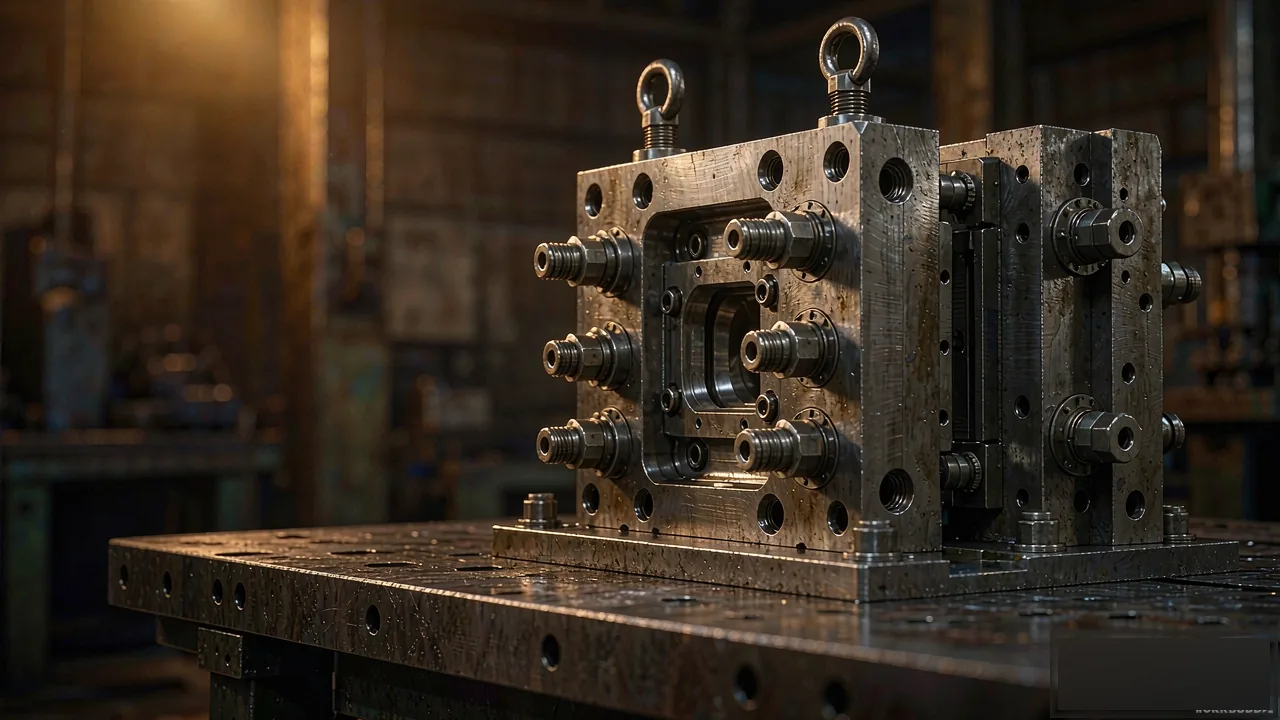
Tool identification and scope. The contract appendix should name the die number, cavity count, part number and revision, mold base size, weight, and manufacture date. Then list what travels with it: spare inserts, slide cores, heaters, thermocouples, hydraulic connectors, identification tags. Photograph the tool before signing. Photos are cheap evidence.
Storage, insurance and fees. Molds sit at the foundry for the life of the program. Agree free storage for a defined window after the final production order, then a stated monthly rate. Require the supplier to insure the tool against fire, flood and theft with you named as loss payee. Exclude unilateral abandonment rules, meaning the supplier cannot quietly dispose of a tool you own during an idle period.
Repair and modification split. Normal production wear is the buyer’s cost. Defects in workmanship and material during the warranty period are the supplier’s. Require a written quotation and your approval before any repair above an agreed threshold, so a surprise repair never approaches the price of a new die.
Exclusive use and no-copy. The expensive failure is not losing the tool. It is the supplier cutting a second cavity from its own CAM data for a competitor. The clause should bar reproduction, reverse engineering or duplication of the tool or its CAD/CAM data for any third party, with defined remedies.
Digital data package. Owning the steel is not enough if you cannot repair or remake it. The deliverables should include 3D models in a neutral format such as STEP or IGES, 2D drawings, electrode and CNC data, the last trial-run report, and the final first article inspection report. With that package, a lost tool can be rebuilt elsewhere in weeks. Without it, you start from the part again.
Release and return. State the sequence plainly. Within an agreed window, commonly 30 days, of written request or the final production run, the supplier releases the tool crate-ready with all documentation and a condition report. Avoid open-ended conditions such as “after accounts are settled.” Name what must be paid and the deadline for handover.
Governing law and disputes. Agree the law and the arbitration seat in advance, and have counsel review the final language. This guide is commercial practice, not legal advice.
3. Tool life: the numbers worth writing down
Tool life is where tooling money meets reality. Commonly cited industry ranges, drawn from NADCA practice, put aluminum high-pressure die life at roughly 80,000 to 150,000 shots before major refurbishment. Zinc hot-chamber tooling runs far longer, often 500,000 to over 1,000,000 shots, because zinc melts near 420 °C against 660 °C for aluminum and the thermal fatigue per shot is far lower.
Three practical consequences:
A shot-life number belongs in the contract. If a supplier quotes a life beyond these ranges without tool coatings and a documented maintenance plan, ask for the number in writing along with what happens if the die falls short.
Amortize against the quantity you will actually buy. The same die can swing per-part tooling cost several times over depending on how long the program runs. Pair every tooling quote with a volume commitment or a renegotiation trigger.
Track shots. Ask for a shot counter or production count per tool and a maintenance log. Rising cosmetic rejects and dimensional drift on a long-running part are usually the first signs of wear, and they show up long before the die fails.
These are industry reference points, not commitments. What any supplier commits to for a specific tool depends on the steel, the coating, the part geometry and the maintenance regime.
4. The portability trade-off
Pure CNC machining has no mold to own, just a program and fixtures, so moving a machined part to a new shop is close to sending the CAD again. That portability is a genuine reason to stay with machining for parts where second-sourcing flexibility matters more than per-part cost. For volume production of complex geometry, casting still wins on unit economics, and the tooling agreement is what keeps that advantage portable.
5. A buyer checklist before the PO goes out
Decide the arrangement consciously: customer-owned, amortized, or hybrid.
Put the ownership trigger sentence on the purchase order itself.
Attach the tool identification appendix with photos and accessories list.
Agree storage terms, insurance and the idle-period rule.
Define the repair cost split and the approval threshold.
Add the no-copy clause covering the tool and its CAD/CAM data.
List the digital deliverables: models, drawings, trial report, first article report.
Write the release window and the handover condition.
Have counsel review governing law and dispute resolution.
For the commercial context around tooling budgets, our die casting tooling cost guide covers ROI and break-even math, and the quotation reading guide shows where tooling sits inside a quote. If the concern is the design itself walking out the door, our IP protection guide covers NNN agreements.
The tool is the asset
A die casting tool is often the single largest line item in a program, and the only one that outlives the purchase order. Written terms cost nothing at the RFQ stage and decide everything at the transfer stage. Settle them before the steel is cut, not after you need to move.
Planning a casting program and want the tooling terms settled up front?
Send your drawings and annual volumes, and we will quote tooling, evidence package and ownership terms together. Our die casting services include mold design and build, so the tool, the data package and the production floor sit under one accountable roof.
Related guides in this topic
Authoritative references
Independent third-party standards and industry bodies, provided for further reading. Sureton is not responsible for third-party content.