The zinc versus aluminum question is rarely about which metal is better. It is about which one is cheaper to own across the whole program, once you count material, cycle time, tool life, and the parts the design actually needs. This guide frames the choice as total cost of ownership rather than price per kilogram, because that is the number that survives a volume change.
1. Material cost is the smallest part of the story
Aluminum and zinc sit at different price points per kilogram, but the part is not priced per kilogram. Zinc is denser, so a given volume weighs more, while aluminum is lighter per part. The raw material line moves with commodity markets, and in 2026 both metals have carried indexation clauses that shift a quote more than the alloy choice sometimes does. Read the surcharge basis before comparing, because the metal line is the one suppliers update most often. Our alloy selection guide goes deeper on the aluminum families and their trade-offs.
2. Cycle time and cavitation
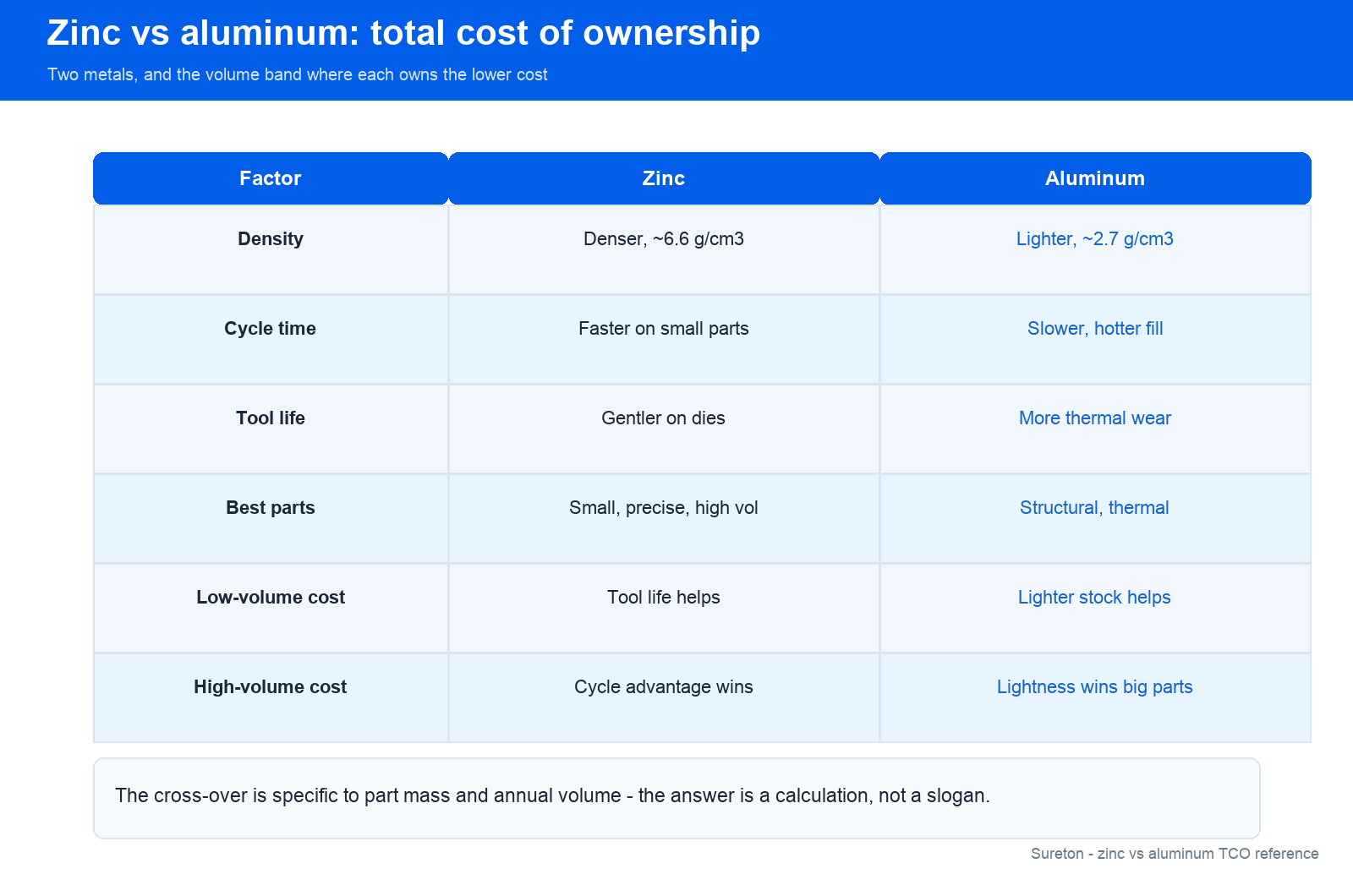
Zinc alloys cast at a lower temperature and fill thin, complex sections cleanly, which often lets a multi-cavity or multi-slide tool produce more good parts per minute than an aluminum tool of similar size. Aluminum runs hotter and needs more care on fill and cooling, which can lengthen the cycle. For high-volume small parts, zinc cycle advantage can outweigh its material weight penalty. For larger structural parts, aluminum lightness and lower density usually win. The balance is a function of part mass and annual volume, not a fixed rule.
3. Tool life and what wears the die
Zinc is gentler on tooling because it runs cooler and does not attack the die steel the way molten aluminum can. Aluminum dies see more thermal cycling and more wear, so tool life is a real line item on long programs. A part that ships in the millions may need die refurbishment with aluminum that zinc would rarely require. This is why tool life belongs in the ownership math, not just the first mold quote. The NADCA design and standards references cover the die life expectations buyers should ask about.
4. Performance: where each metal fits
Aluminum carries heat better and weighs less, which is why it dominates structural and thermal parts. Zinc offers tighter as-cast precision, lower and more predictable shrinkage, and the ability to cast fine features and thin sections that would need machining in aluminum. For small, precise, high-volume housings, zinc often needs less secondary work, which pulls total cost down. For larger or heat-bearing parts, aluminum stays the default. Our precision zinc guide and our zinc versus aluminum electronics guide cover the two ends of that split.
5. Build the TCO, not the unit price
Total cost of ownership adds the amortized tool, the material exposure, the cycle-driven piece cost, the die refurbishment, and the secondary operations each route needs. Below a certain volume, the simpler tool and the lighter aluminum stock can make aluminum cheaper despite slower cycles. Above it, zinc cycle and tool-life advantages take over for small parts. The crossover is specific to the part, so the honest answer is a calculation, not a slogan. Our tooling cost guide shows how to amortize the mold into that comparison.
6. Recycled content and sourcing exposure
Both metals recycle well, and recycled aluminum in particular carries a much lower embedded carbon than primary metal, which matters for buyers with a reported footprint. The catch is consistency: recycled streams shift in composition, so a program that specifies primary-grade properties needs to say so. Sourcing also carries tariff and dual-source exposure that sits outside the part cost entirely. Our recycled aluminum guide covers the carbon and compliance side, and the ownership math is incomplete if you leave it out.
The takeaway
Zinc or aluminum is a total-cost question, not a metal-purity one. Count material exposure, cycle advantage, and tool life against your volume, and let the function pick the alloy. Send the drawing with your expected annual quantity and we will work the ownership math for this specific part rather than quote a metal.
Browse all guides in this topic
Authoritative references
Independent third-party standards and industry bodies, provided for further reading. Sureton is not responsible for third-party content.