
Vacuum Die Casting

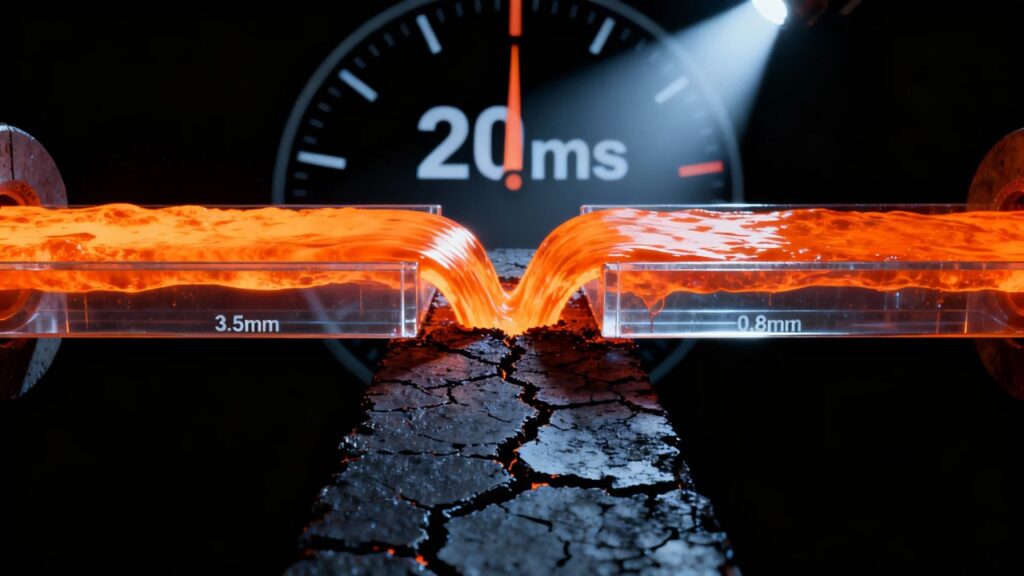
a stream of molten aluminum (bright orange) flows into a narrowing transparent channel (3.5mm down to 0.8mm).

Thin-Wall Die Casting: How to Achieve <1.0mm Walls Without Failure

Pushing the limits of aluminum die casting geometry. We explore the physics of thin-wall casting (0.8mm-1.5mm), flow-to-thickness ratios, and the specific DFM strategies Sureton uses to prevent cold shuts in heatsinks and housings. In the era of EV lightweighting and 5G thermal management, the directive from product designers is clear: “Make it lighter, make it smaller, […]

Thin-Wall Die Casting: How to Achieve <1.0mm Walls Without Failure Read More »
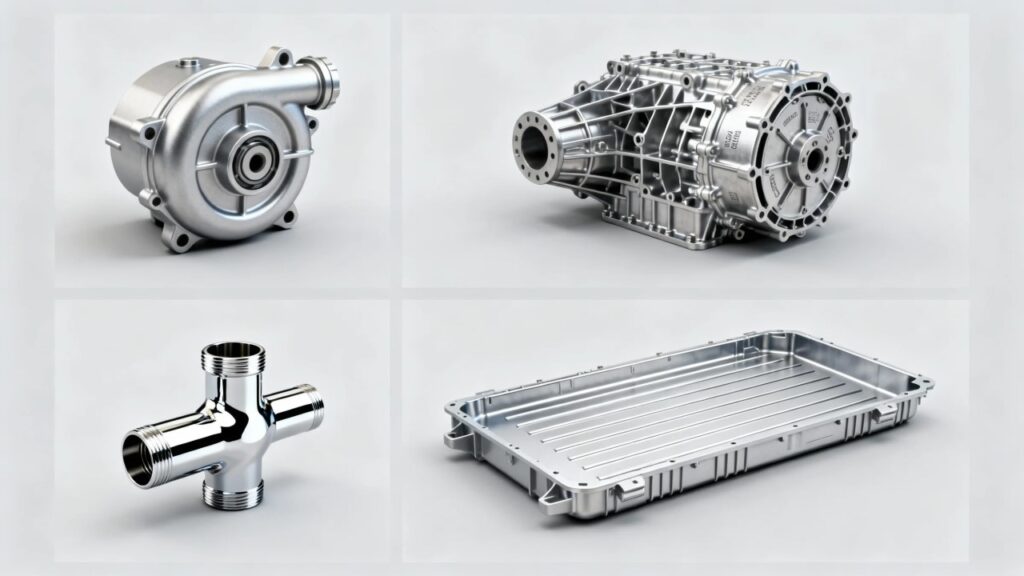
a clean, professional product collage of four high integrity aluminum die cast parts

Solving the Porosity Puzzle: Why Vacuum Die Casting is the Engineer’s Best Friend

Porosity is the nemesis of die casting. Learn how Vacuum Die Casting works, when to use it, and how Sureton uses it to deliver leak-proof, high-density aluminum parts. There is no worse feeling for a manufacturing engineer than machining a seemingly perfect die-cast part, only to hit a pocket of air 2mm below the surface.

Solving the Porosity Puzzle: Why Vacuum Die Casting is the Engineer’s Best Friend Read More »

Scroll to Top
Sureton Company Logo – Precision Manufacturing & Industrial Solutions

Get in Touch

If you cannot find a suitable product, please leave a message or contact us. We have a dedicated technical team to serve you.

Sharing Your 2D Drawings & 3D Models Will Help Our Engineersto Quote Faster.

Note that, Max 100MB/fe, Suppont: pdf, dwg, dxf, drw, iges, igs, ipt, jpg, jpeg, it, step, stp.stl, sat, sldasm, sldprt, siddrw, png.svg,x_t,xb,3dxml, 3mf, zip…If your file is not supported, please compress it into zip and upload