Tolerances on a casting drawing decide both function and cost. The expensive mistake is calling out machined tolerance on every feature, which doubles cost for nothing. Here is where the as-cast band is enough, and where machining actually earns its place.
The as-cast band
As-cast features commonly hold about plus or minus 0.05 mm. That is enough for most locating and structural features, and for the broad geometry that positions a part in an assembly. Any face that is not marked critical should be assumed as-cast.
Where CNC finishes
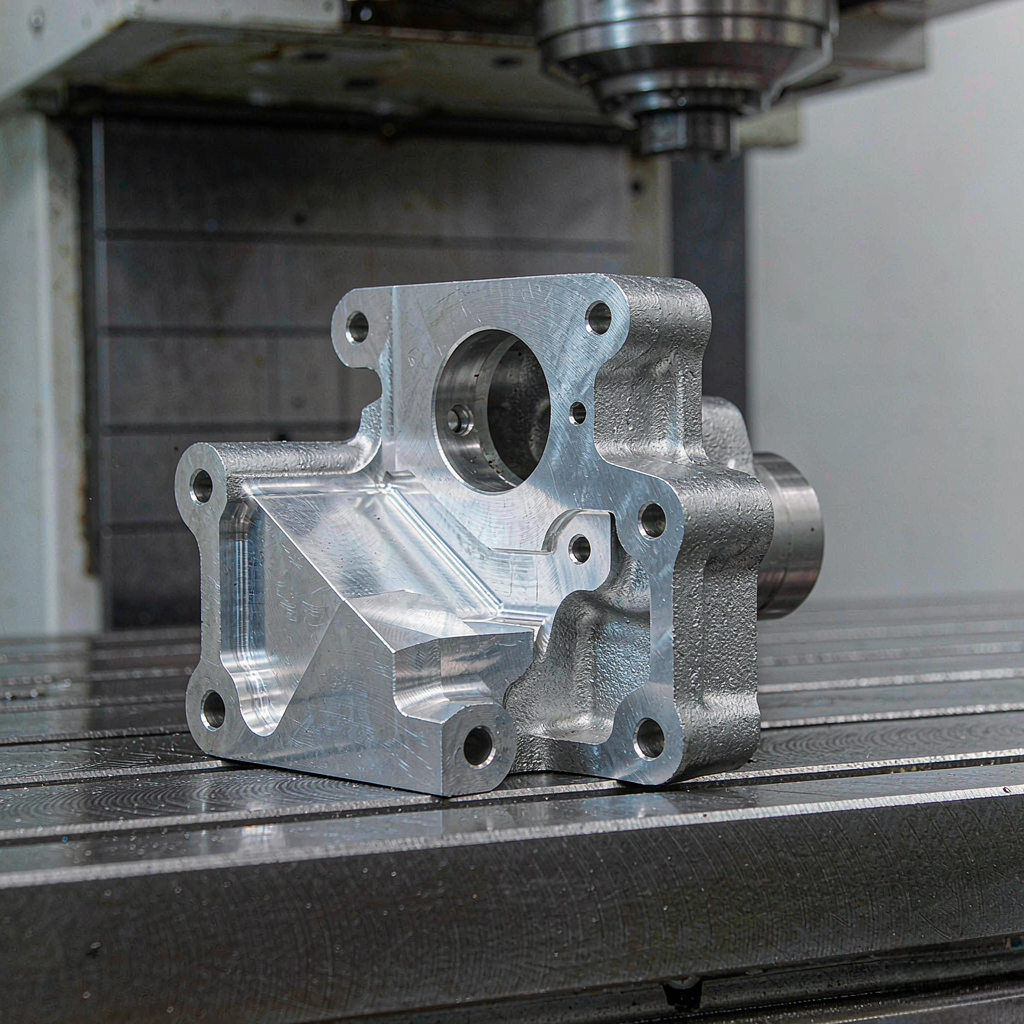
The faces that need more are the ones that seal or bolt: gasket surfaces, flange faces, bearing seats and bolt circles. These get finished by CNC to about plus or minus 0.01 mm. The rule is simple. Machine where the part actually seals or fastens, and leave the rest as-cast.
Shrinkage and draft
A casting shrinks as it cools, and every vertical face needs draft so the part releases from the tool. Both shift dimensions in predictable ways, so the drawing should set a machined datum and let the casting hold the envelope. Keep wall thickness uniform and cooling stays even, which keeps tolerances stable.
How to specify on the drawing
Mark only the critical faces with a tighter callout, tie them to a common datum, and let the casting hold the envelope. A good drawing answers one question for every feature: does this need machining, or can it stay as-cast.
Typical tolerances by feature (typical values)
| Feature | Common as-cast tolerance | When to CNC-finish |
|---|---|---|
| Overall envelope | about plus or minus 0.05 mm | rarely |
| Locating bosses | about plus or minus 0.05 mm | if mating to a bore |
| Sealing / gasket face | about plus or minus 0.05 mm | yes, to about plus or minus 0.01 mm |
| Bolt circle | about plus or minus 0.05 mm | yes, to about plus or minus 0.01 mm |
| Bearing seat | about plus or minus 0.05 mm | yes, to about plus or minus 0.01 mm |
Frequently asked questions
What tolerance can die casting hold?
As-cast features commonly hold about plus or minus 0.05 mm. Sealing faces and bolt circles are usually finished by CNC to about plus or minus 0.01 mm where the function demands it.
Do all features on a casting need machining?
No. Machining should be spent only on faces that seal or bolt. Leaving structural and locating features as-cast keeps cost down while meeting function.
Why does a casting drawing need draft?
Every vertical face needs draft so the part releases from the steel tool. Draft and shrinkage shift dimensions in predictable ways, so the drawing should set a machined datum and let the casting hold the envelope.
Sureton Precision Manufacturing runs aluminium and zinc die casting (88 to 800 tonne presses) and in-house CNC for appliance, electronics and instrument hardware. This guide reflects established practice and stated capabilities; it is not a quotation or a guarantee of any specific part. Contact: [email protected]