From logistics drones to electric vertical takeoff and landing aircraft (eVTOLs), the “Low-Altitude Economy” is rapidly shifting from science fiction to commercial reality. However, as the industry moves from prototyping to mass production, manufacturers face a critical challenge: How to build lighter, stronger, and more reliable aircraft at scale?
At Sureton, we believe the answer lies in Precision Die Casting. Just as it revolutionized the automotive industry, die casting is now providing the essential “skeleton and muscle” for the next generation of flight.
Why the AAM Sector is Turning to Die Casting
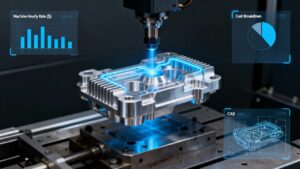
Traditionally, aerospace relied heavily on CNC machining from solid billets. While precise, this method is costly, slow, and material-intensive—bottlenecks that hinder the commercial scalability of drones and air taxis.
High-Pressure Die Casting (HPDC) offers the perfect solution for the AAM sector’s unique demands:
1. Extreme Lightweighting (The “Skeleton”)
Gravity is the enemy of flight time. Die casting allows engineers to design thin-wall components with complex internal ribbing. This maximizes strength-to-weight ratios, directly translating to longer flight ranges and higher payload capacities.
2. Thermal Management for Electric Propulsion (The “Muscle”)
Most modern low-altitude aircraft are electric. Motors, controllers, and batteries generate immense heat. Aluminum die casting is ideal for creating motor housings and heat sinks with intricate cooling fins and integrated liquid cooling channels, ensuring the “tri-electric” systems operate at peak efficiency.
3. Scalability & Cost Efficiency
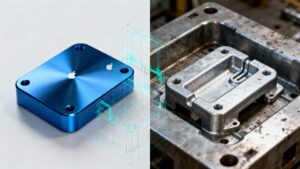
Once a mold is created, die casting can produce thousands of identical parts with cycle times measured in seconds, not hours. For eVTOL startups aiming for mass adoption, this is the only viable path to reduce unit costs significantly.
4. Part Consolidation
Instead of assembling ten different stamped or machined parts with rivets (which add weight and failure points), die casting allows for integral molding. A single, complex die-cast part is stiffer, stronger, and easier to assemble.
Where You’ll Find Die Cast Parts in Modern Aircraft
At Sureton, we see die casting applications expanding across critical systems:
Structural Airframe: Main fuselage frames, connecting arms for multi-copters, and landing gear components.
Propulsion Systems: Motor housings, gearbox casings, and stator holders that require tight tolerances (often achieved with Sureton’s secondary CNC machining).
Battery Systems: Battery pack enclosures and brackets that offer EMI shielding and fire resistance.
Avionics & Control: Servo housings, gimbal parts for cameras, and flight control unit (FCU) casings.
The Future: Trends Shaping Aerospace Die Casting
To meet the stringent safety standards of aviation, die casting technology is evolving:
Mega-Casting: Inspired by Tesla, eVTOL manufacturers are exploring large-scale single-piece castings to replace entire sub-assemblies.
Vacuum Die Casting: By removing air from the mold, we can produce porosity-free parts that can be heat-treated (T6) for superior strength, suitable for structural safety-critical parts.
Advanced Materials: The use of high-strength aluminum alloys and ultra-light magnesium alloys is pushing the boundaries of weight reduction.
Conclusion: Ready for Takeoff?
The transition from a prototype in a hangar to a fleet in the sky requires a manufacturing partner who understands both precision and volume.
While challenges like aviation certification and mold costs exist, the benefits of die casting are undeniable. At Sureton, we combine advanced die casting capabilities with precision CNC finishing to deliver aerospace-grade components.
Are you designing the future of flight?
[Contact Sureton today] for a Design for Manufacturing (DFM) review of your drone or eVTOL components. Let’s build the future, together.