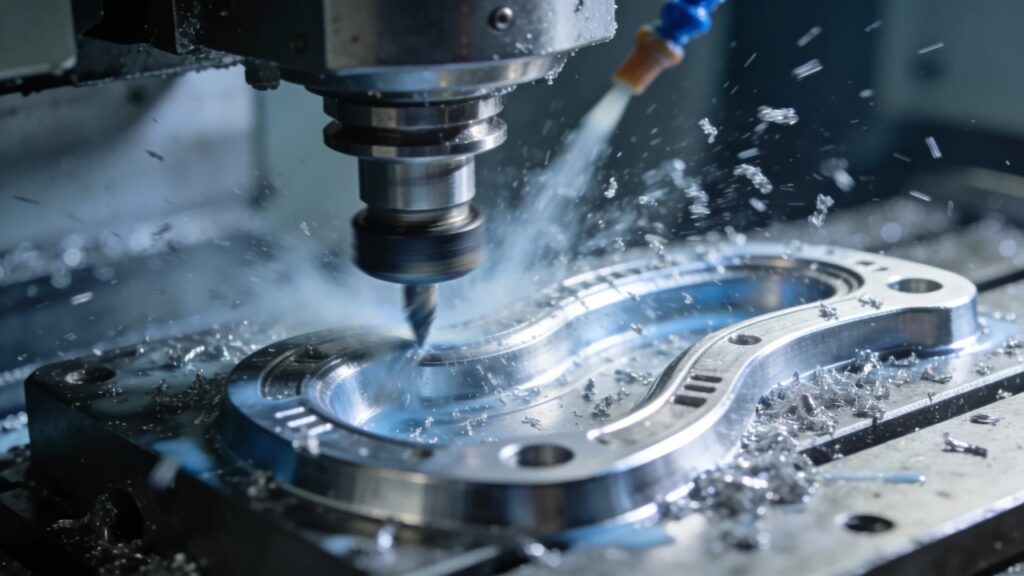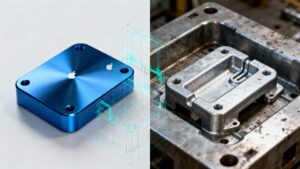
In the high-stakes world of optoelectronic medical aesthetics—whether it’s IPL, Diode Laser, RF, or HIFU systems—mechanical engineers face a constant dilemma: Should you prioritize the extreme precision of CNC machining, or embrace the scalability of Die Casting?
At Sureton, we’ve seen brilliant designs hit manufacturing roadblocks because the wrong process was chosen too early. This often leads to thermal failures in handpieces or spiraling costs during mass production.
Today, we’re moving beyond generic “quality” talk. Let’s analyze these two processes through the lens of Thermal Management, Surface Finish, and Cost Scalability to help you make the right decision for your next device.
1. The Handpiece (Applicator): CNC is King 
The handpiece is the heart of your device and the only part that touches the patient. For this critical component, CNC Machining is almost always the superior choice. Here is why:
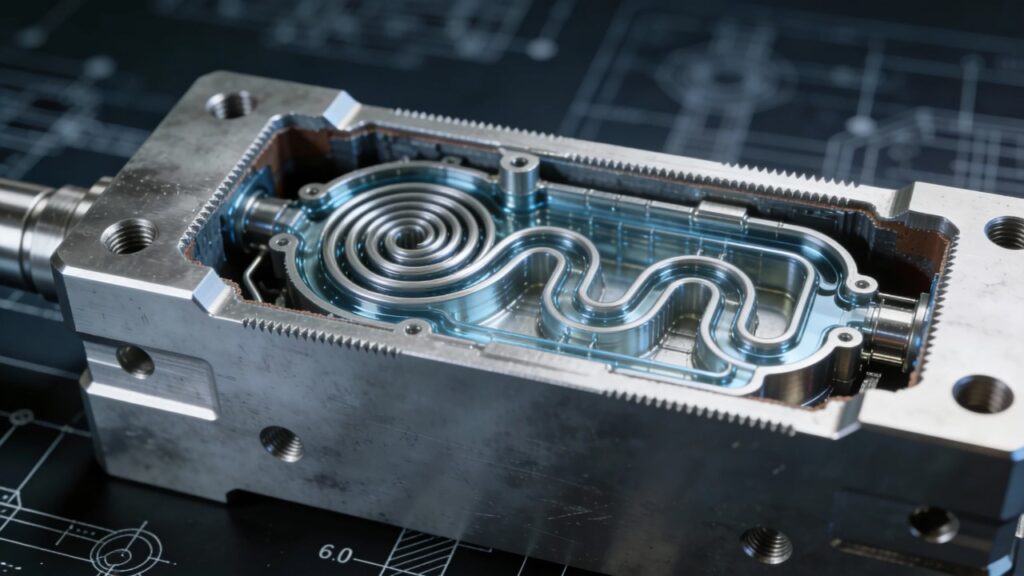
Complex 3D Cooling Channels:
To support high-energy Sapphire Cooling systems, the internal metal chamber requires intricate water pathways. Die casting molds struggle with these complex internal undercuts. With 5-Axis CNC, we can mill optimized flow paths directly into solid 6061 Aluminum or 316 Stainless Steel blocks, ensuring zero dead zones and maximum heat dissipation.Zero Risk of Leakage:
Die-cast parts inherently contain microscopic porosity. Under high-pressure water circulation, this can lead to micro-leaks—a catastrophic failure for electronic components. CNC parts are machined from solid billets, offering 100% density and airtight reliability.Rapid Iteration (Time-to-Market):
Handpieces often require multiple iterations for different wavelengths (755nm, 808nm, 1064nm). CNC requires no tooling investment, allowing you to validate new designs in as little as 2 weeks.
2. The Main Chassis & Internal Frame: The Efficiency of Die Casting
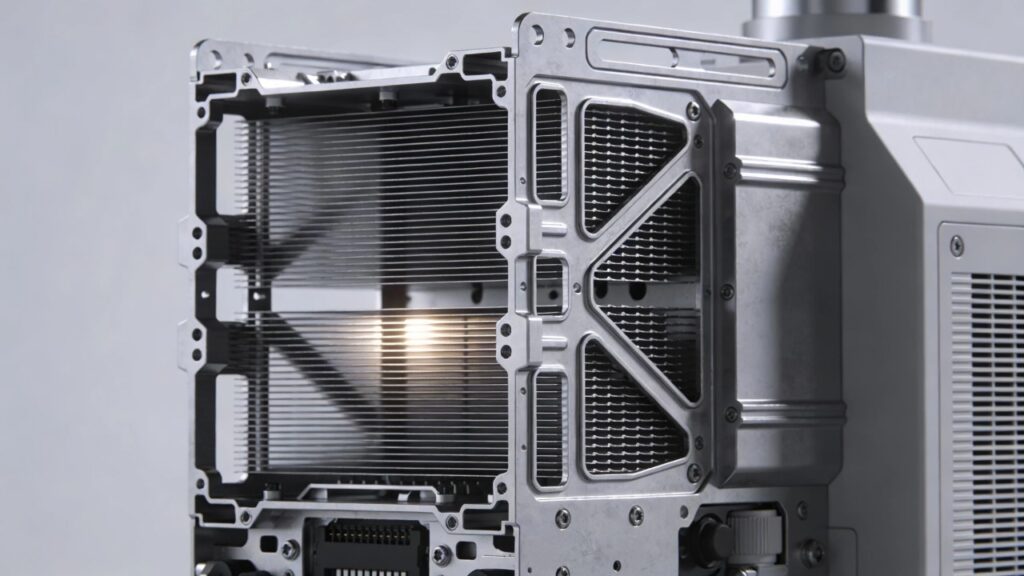
Once your device passes FDA/CE certification and hits volume production (>2,000 units/year), High-Pressure Die Casting (HPDC) becomes the undisputed champion.
Internal Thermal Management:
Machining large heat sinks from solid blocks is slow and wasteful. Aluminum die casting allows us to mold complex, high-density fin structures in seconds. While ADC12 alloy has slightly lower thermal conductivity (~96 W/m·K) than CNC 6061 (~167 W/m·K), optimized structural design can easily meet system cooling requirements at 60% lower cost.Structural Rigidity:
For articulated arms or screen support hinges, die casting provides excellent consistency and stiffness. We can design thin-wall structures with reinforced ribs to reduce weight, preventing the device from becoming top-heavy.
3. Surface Finish: The “Apple-Like” Aesthetic
Medical aesthetic devices must resist coupling gels and alcohol while looking premium.
CNC Parts: The dense surface structure is perfect for Type II/III Anodizing. This achieves that premium, matte-sandblasted finish seen on high-end consumer electronics, offering superior corrosion resistance.
Die Cast Parts: Due to silicon content and flow marks, standard die castings do not anodize well (often resulting in a blotchy, dark finish). If your chassis needs a premium look, Sureton recommends Powder Coating or wet painting. For specific needs, we can employ Vacuum Die Casting to improve surface density.
The Engineer’s Verdict: A Quick Comparison
| Component | Recommended Process | The “Why” |
| Core Handpiece / Tip | CNC Machining | Requires absolute airtightness, complex water channels, and premium anodized finish. |
| Internal Heat Sinks | Die Casting | Cost-efficiency for volume production; complex fin geometry. |
| Screen Bezels / Trim | CNC (Low Vol) / Die Cast (High Vol) | Break-even point is typically around 1,500–2,000 units. |
| Articulated Arms | Die Casting + CNC | Combines the strength of casting with the precision of CNC bored holes. |
Conclusion
At Sureton, we don’t just follow drawings; we understand the physics of Optics, Electricity, and Heat.
Whether you are in the prototyping phase needing a 5-axis machined handpiece, or scaling up for a global launch with die-cast housings, our engineering team provides DFM (Design for Manufacturing) feedback to optimize your build.
Don’t let manufacturing limitations compromise your design.
[Contact Us] or send your STEP files to Sureton today. Let’s build a device that performs as beautifully as it looks.